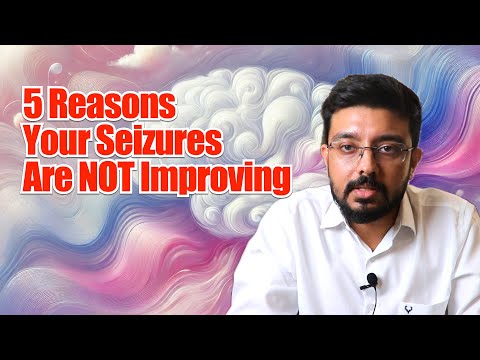
Drug-Resistant Epilepsy Treatment in Ahmedabad

When seizures aren't controlled by medicine — expert evaluation and advanced treatment by NIMHANS specialists

Expert Consultation: +91 87809 66624

Living with epilepsy is challenging enough, but when seizures continue despite trying multiple medications, it can feel overwhelming and hopeless. At Gujarat Epilepsy & Neuro Clinic, we specialize in treating drug-resistant epilepsy, offering advanced diagnostic tools and treatment options that go beyond conventional medication management.

If you or a loved one is searching for drug-resistant epilepsy treatment in Ahmedabad or wondering why seizures aren't controlled by medicine, you've come to the right place. Dr. Rutul Shah and Dr. Abhishek Gohel are here to help you explore every possible avenue toward seizure freedom.

What is Drug-Resistant Epilepsy?

Drug-resistant epilepsy (DRE), also known as refractory epilepsy or intractable epilepsy, is diagnosed when a person continues to experience seizures despite adequate trials of at least two appropriately chosen and tolerated anti-seizure medications.

According to the International League Against Epilepsy (ILAE), approximately 30% of people with epilepsy will develop drug-resistant epilepsy. This means that even with proper medication adherence and optimal dosing, seizures persist and significantly impact quality of life.

Key Characteristics of Drug-Resistant Epilepsy

  • Seizures continue after trying 2 or more anti-epileptic drugs (AEDs)
  • Medications were taken at therapeutic doses for adequate duration
  • Seizure frequency remains unacceptable despite treatment adjustments
  • The condition significantly affects daily activities, work, and relationships

Why Do Some People Develop Drug-Resistant Epilepsy?

Several factors contribute to medication resistance:

  • Structural brain abnormalities: Lesions, tumors, or malformations that trigger seizures
  • Genetic factors: Variations in drug metabolism or brain chemistry
  • Underlying cause: Certain epilepsy syndromes are inherently harder to control
  • Seizure type: Some seizure types respond less favorably to medications
  • Progressive conditions: Epilepsy that worsens over time despite treatment

Understanding the underlying cause is crucial for developing an effective treatment strategy, which is why comprehensive evaluation at a specialized epilepsy center is essential.

When Should You Seek Specialist Help?

Many patients with uncontrolled seizures wait too long before seeking specialized care. Early referral to an epilepsy specialist can make a significant difference in outcomes.

Warning Signs That You Need Specialized Epilepsy Care

  1. Seizures persist after trying two medications at proper doses
  2. Seizure frequency is increasing over time
  3. Medication side effects are intolerable or affecting quality of life
  4. You've never had advanced testing like Video-EEG monitoring
  5. Your diagnosis is uncertain or was made without proper evaluation
  6. Seizures are affecting your ability to work, drive, or live independently
  7. You experience injuries during seizures
  8. Memory or cognitive problems are worsening

The Importance of Timely Referral

Research shows that patients with drug-resistant epilepsy who are referred to specialized epilepsy centers within 2 years of diagnosis have better outcomes than those who wait longer. Unfortunately, many patients in India wait 10-15 years before seeing an epileptologist, missing valuable time when interventions could have been most effective.

At Gujarat Epilepsy & Neuro Clinic, our NIMHANS-trained specialists have extensive experience in evaluating complex epilepsy cases and determining the best path forward for each patient.

Treatment Options for Drug-Resistant Epilepsy

When standard medications fail, several advanced treatment options can help achieve better seizure control or even complete seizure freedom.

1. Medication Optimization

Before considering other treatments, our team thoroughly reviews your medication history:

  • Ensuring correct diagnosis: Misdiagnosis is common—up to 20% of epilepsy cases are actually non-epileptic events
  • Verifying appropriate drug selection: Different seizure types require different medications
  • Checking for drug interactions: Some combinations reduce effectiveness
  • Evaluating adherence: Missed doses significantly impact seizure control
  • Trying newer medications: Recently approved drugs may work when older ones haven't
  • Rational polytherapy: Strategic combination of medications with different mechanisms

2. Video-EEG Monitoring

Video-EEG monitoring is the gold standard for epilepsy evaluation and is essential for patients considering surgery or needing diagnostic clarification.

What happens during Video-EEG monitoring:

  • Continuous recording of brain activity (EEG) and video for 3-7 days
  • Capture of typical seizure events for detailed analysis
  • Precise localization of where seizures originate in the brain
  • Differentiation between epileptic seizures and non-epileptic events

Why it matters:
Video-EEG helps us understand exactly what type of seizures you have and where they come from. This information is critical for determining whether surgery might be an option and what type of procedure would be most effective. Learn more about Video-EEG monitoring.

3. Epilepsy Surgery Evaluation

For many patients with drug-resistant epilepsy, surgery offers the best chance of seizure freedom. Studies show that up to 60-80% of carefully selected patients become seizure-free after surgery.

Types of epilepsy surgery:

  • Resective surgery: Removal of the brain area causing seizures (e.g., temporal lobectomy)
  • Laser ablation (LITT): Minimally invasive destruction of seizure focus
  • Corpus callosotomy: Disconnection surgery to prevent seizure spread
  • Hemispherectomy: For severe cases affecting one brain hemisphere

Pre-surgical evaluation includes:

  • High-resolution MRI of the brain
  • Video-EEG monitoring
  • Neuropsychological testing
  • PET or SPECT scans
  • Sometimes invasive EEG monitoring (stereo-EEG)

Referral for Surgery: For advanced procedures such as epilepsy surgery, our team conducts comprehensive pre-surgical evaluation and coordinates with leading epilepsy surgery centres across India for surgical intervention when indicated. We maintain referral relationships with premier institutions including NIMHANS Bengaluru, AIIMS Delhi, and other specialized epilepsy surgery centers to ensure our patients receive world-class surgical care when appropriate. Learn more about surgery evaluation.

4. Alternative Treatment Approaches

While medication optimization, video-EEG monitoring, and surgery evaluation remain the cornerstone treatments in our practice, we recognize that other therapeutic options exist. These may include specialized dietary approaches, neuromodulation devices, and other emerging therapies. Our specialists can discuss these options and provide appropriate referrals when indicated as part of a comprehensive treatment plan.

Our Drug-Resistant Epilepsy Specialists

Both Dr. Rutul Shah and Dr. Abhishek Gohel have specialized training in managing complex, drug-resistant epilepsy cases with advanced diagnostic and treatment approaches.

Dr. Rutul Shah

DM Neurology (NIMHANS - AIR 1)
PDF Epilepsy (Amrita Institute, Kochi)

Leading epileptologist with extensive experience in drug-resistant epilepsy evaluation, video-EEG monitoring, and pre-surgical workup. Expert in medication optimization and surgical candidate assessment.

View Profile

Dr. Abhishek Gohel

DM Neurology (NIMHANS)
PDF Epilepsy (Amrita Kochi)

Specialist in drug-refractory epilepsy management, LTVEEG monitoring, and PNES evaluation. Particular expertise in complex cases requiring advanced diagnostic approaches.

View Profile

Frequently Asked Questions About Drug-Resistant Epilepsy

How do I know if I have drug-resistant epilepsy?
You may have drug-resistant epilepsy if you continue to have seizures despite trying at least two anti-epileptic medications at appropriate doses for adequate periods. If you've been on multiple medications and still have seizures that affect your daily life, it's time to consult an epilepsy specialist for comprehensive evaluation.
Can drug-resistant epilepsy be cured?
While cure depends on individual circumstances, many patients with drug-resistant epilepsy can achieve seizure freedom or significant improvement through advanced treatments. Epilepsy surgery has success rates of 60-80% in properly selected candidates. Other treatment approaches can also provide substantial improvement in seizure control.
Is epilepsy surgery safe?
Modern epilepsy surgery is generally safe when performed at experienced centers. Like any surgery, there are risks, but serious complications are rare. The potential benefits—including seizure freedom and improved quality of life—often outweigh the risks for appropriate candidates. Our specialists will thoroughly discuss risks and benefits with you.
How long does it take to know if a new treatment is working?
This varies by treatment type. Medication changes may show effects within weeks to months. Surgical results are usually apparent within the first year, though some improvement can continue beyond that. Our team will work with you to monitor progress and adjust treatment as needed.
What should I bring to my first consultation at Gujarat Epilepsy Clinic?
Please bring all previous medical records related to your epilepsy, including MRI and EEG reports, medication history, and any seizure diaries you've kept. If possible, bring a family member who has witnessed your seizures. Video recordings of seizure episodes (if available) are extremely helpful for accurate diagnosis.

Medical Disclaimer: The information on this website is for educational purposes only and should not be considered medical advice. Individual treatment outcomes vary. Always consult a qualified healthcare provider for diagnosis and treatment decisions. In case of a medical emergency, call 108 or visit your nearest emergency department.

📱